
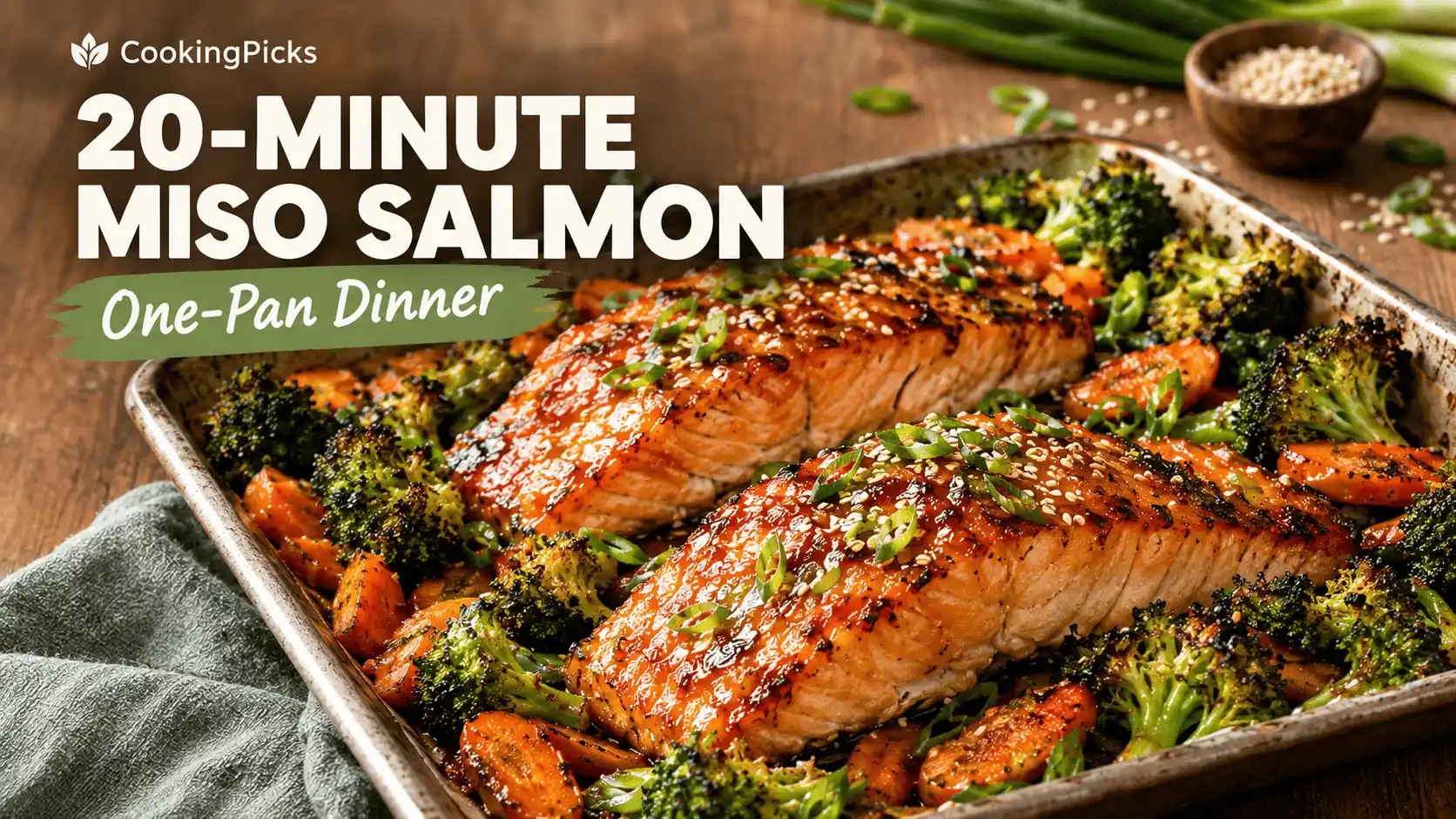
Sheet-pan miso salmon is salmon fillets brushed with a sweet-savory miso glaze and roasted alongside vegetables on one pan, ready in about 30 minutes. The glaze turns deep amber under the broiler in under two minutes, so the fish comes out lacquered on top and still moist inside. Roasting the vegetables and salmon on the same pan turns this into a real one-pan dinner instead of a fish recipe with a separate side to cook. It’s built for a weeknight, but it’s tidy enough to serve to guests.
Why You’ll Love This
- Ready in about 30 minutes, most of it hands-off oven time.
- One sheet pan for the salmon and the vegetables, so there’s one pan to wash.
- The 3-tablespoon miso glaze caramelizes to a deep amber crust in under 2 minutes under the broiler.
- About 34g of protein per serving from a 6-ounce fillet.
- Gluten-free with a one-ingredient swap (tamari for soy sauce), and dairy-free as written.
- Leftovers reheat well the next day, flaked over rice or greens for lunch.
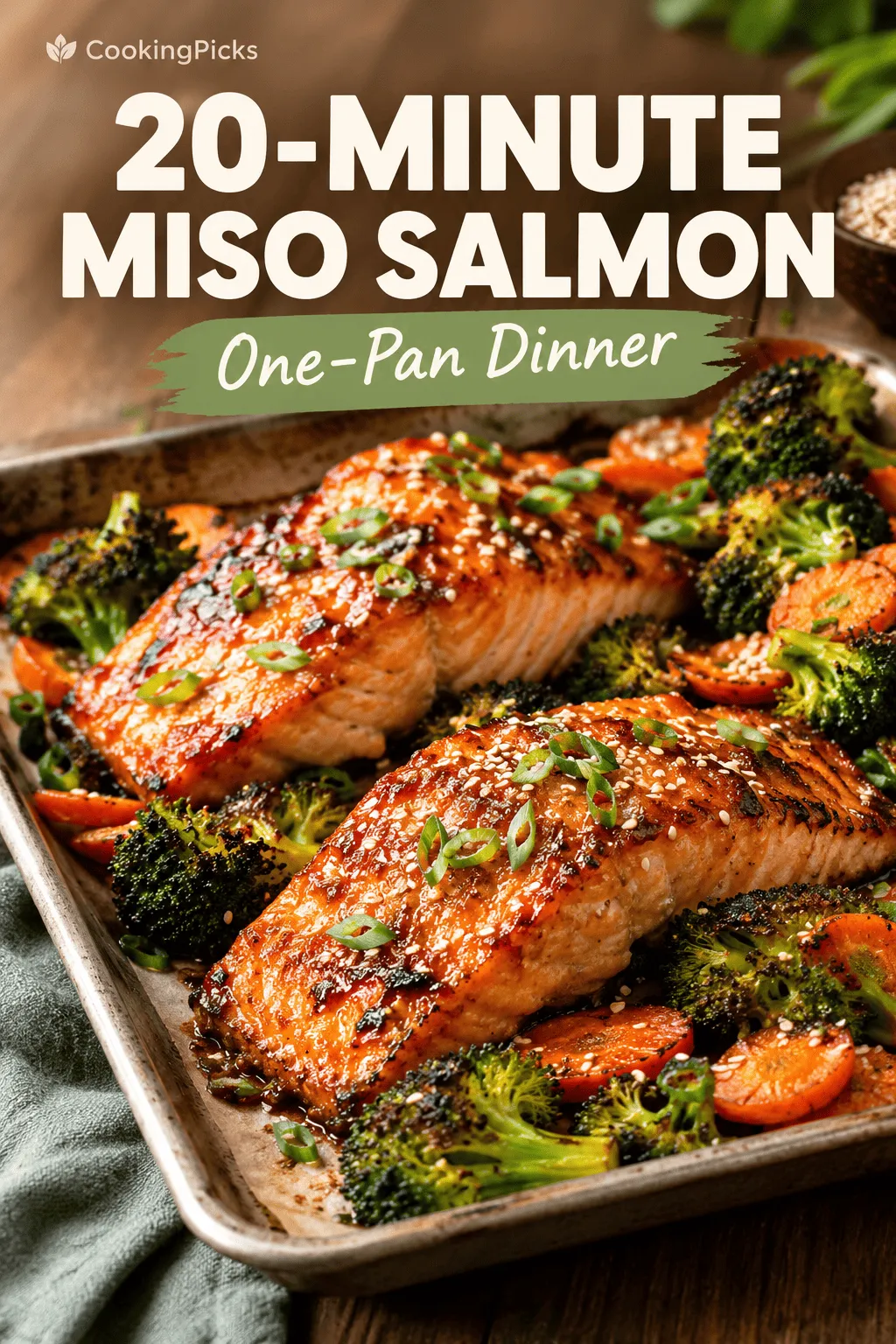
Easy Sheet-Pan Miso Salmon
Ingredients
Equipment
Method
- Preheat and prep. Preheat the oven to 425°F (220°C). Line a rimmed sheet pan with parchment paper.
- Make the glaze. In a small bowl, whisk the miso, mirin, soy sauce, honey, rice vinegar, ginger, garlic, and sesame oil until smooth. The mixture should look glossy and pourable, with no lumps of miso paste. This takes about 1 minute of whisking.
- Season and roast the vegetables first. Toss the broccoli and bell pepper with the oil, salt, and pepper. Spread them over two-thirds of the sheet pan, leaving room for the salmon. Roast for 8 minutes.
- Add the salmon. Pat the salmon dry with paper towels and season lightly with salt and pepper. Brush half of the glaze over the top of each fillet. Push the vegetables to one side and place the salmon skin-side down on the pan, saving the rest of the glaze.
- Roast. Return the pan to the oven and roast for 8 to 10 minutes, until the salmon is nearly opaque at the edges but still slightly darker in the center. Avoid opening the oven repeatedly; each check drops the oven temperature and adds cook time.
- Broil to finish. Switch the oven to broil. Brush the remaining glaze over the salmon and broil for 1 to 2 minutes, watching the whole time. You’re looking for the glaze to turn deep amber and slightly blistered at the edges, not black, miso and honey both burn fast under direct broiler heat. Check the internal temperature at the thickest part of the fillet; it should read 145°F (63°C), per USDA guidance for cooked fish.
- Rest and serve. Let the salmon rest for 2 minutes on the pan, carryover heat finishes the last few degrees without drying it out. Scatter scallions and sesame seeds over the top. Serve straight from the pan with lime wedges on the side.
Notes
Pro Tips / Troubleshooting
- My glaze turned black and bitter, not amber. Miso and honey both scorch quickly under a broiler. Broil on the middle rack, not the top one, and check every 15 seconds after the 1-minute mark. If your broiler runs hot, skip it and just bake 2 to 3 minutes longer instead.
- My salmon came out dry. Pull it at 135–140°F instead of waiting for 145°F on the thermometer; carryover heat during the rest brings it the rest of the way without overcooking.
- The glaze tastes too salty. Miso brands vary a lot in sodium. Taste the glaze before brushing it on, and thin it with a teaspoon of water if it tastes sharp.
- The fish stuck to the pan. Parchment paper solves this almost every time. If you’re out, oil the foil generously and place the fillets skin-side down.
- The vegetables were soggy or undercooked. Cut pieces a similar size, don’t crowd the pan, and give the vegetables their head start (step 3) since they take longer than the fish.
- The glaze was thin and ran off the fish. Mirin brands vary in sweetness and viscosity. Simmer the glaze in a small saucepan for 1 to 2 minutes to thicken it slightly before brushing it on.
- I don’t have mirin. Substitute 1 tablespoon rice vinegar plus 1 teaspoon sugar. The flavor is slightly less rounded but close.
- I’m doubling the recipe. Use two sheet pans instead of one crowded one. A packed pan traps steam, and the glaze won’t caramelize properly.
Variations
- Air fryer: Skip the broiler step. Air fry the glazed salmon at 400°F (200°C) for 7 to 9 minutes, no flipping needed. Roast the vegetables separately in batches since most air fryer baskets are small.
- Grill version: Grill the salmon skin-side down over medium-high heat for 8 to 10 minutes total, brushing on the glaze only in the last 3 minutes to keep it from burning over open flame.
- Gluten-free: Use tamari instead of soy sauce and confirm your miso paste is labeled gluten-free.
- Spicier: Whisk 1 teaspoon chili garlic sauce or sriracha into the glaze.
- Different vegetables: Swap the broccoli and bell pepper for bok choy, asparagus, snap peas, or green beans depending on the season. Cut everything to a similar thickness so it cooks evenly.
Make-Ahead, Storage, Reheating, Freezing
- Make-ahead glaze: Whisk together up to 3 days ahead; store in an airtight container in the fridge.
- Make-ahead marinating: Coat the salmon in glaze and refrigerate, covered, up to 24 hours before roasting.
- Storage: Refrigerate leftovers in an airtight container up to 3 days.
- Freezing: Freeze cooked salmon in an airtight container or freezer bag up to 2 months. The texture softens on thawing, so leftovers freeze better flaked into rice bowls or salads than reheated as a whole fillet.
- Reheating: Cover and reheat in a 275°F (135°C) oven for 8 to 10 minutes, just until warmed through. Avoid the microwave, which tends to make salmon rubbery.
What to Serve With It
- Steamed jasmine or short-grain rice
- Garlic sesame noodles
- Cucumber sunomono salad
- A simple miso soup
- Roasted edamame or extra vegetables
FAQ
Can I make miso salmon ahead of time? Yes. Marinate the salmon in the glaze up to 24 hours ahead, covered in the fridge, and roast it just before serving. The glaze itself keeps up to 3 days ahead in an airtight container.
What can I use instead of mirin? Substitute 1 tablespoon rice vinegar plus 1 teaspoon sugar for the mirin. The glaze will taste slightly less rounded, but the recipe still works.
Is miso salmon healthy? Salmon is a good source of protein and omega-3 fats, and this version adds roasted vegetables to the same pan. Miso and soy sauce both add sodium, so it’s not a low-sodium dish as written.
Can I use frozen salmon? Yes. Thaw it fully in the fridge overnight and pat it very dry before glazing, since excess moisture keeps the glaze from caramelizing properly.
How do I keep the miso glaze from burning? Watch the broiler closely and pull the pan the moment the glaze turns deep amber, usually 1 to 2 minutes. Miso and honey both contain sugars that scorch fast under direct heat.
Can I make this recipe gluten-free? Yes. Swap the soy sauce for tamari and confirm the miso paste you use is labeled gluten-free, since some brands include barley.
How long does miso salmon keep in the fridge? Up to 3 days in an airtight container. Reheat gently in a low oven rather than the microwave to avoid a rubbery texture.
Can I cook this in an air fryer? Yes. Air fry the glazed salmon at 400°F (200°C) for 7 to 9 minutes, skipping the broiler step, and roast the vegetables separately in batches.
Made this? Leave a star rating and a comment below it’s how this recipe gets found by other cooks, and how future versions get better.



Leave a Reply