
Dauphinoise is the dish I get asked to bring whenever there’s a roast on the table, and it’s one I’ve never had to look up twice. That’s down to how short Delia’s version is. Potatoes, cream, milk, a little garlic, a little butter, and a very long time in a low oven.
This is her own recipe, which she calls Gratin Dauphinois, from her Complete Cookery Course. I follow her method and her quantities. When I add something of my own, I say so. A lot of pages online muddle the oven temperature and the number of servings, so I’ve tried to be clear on both.
Jump to the recipe card at the end of this page for exact quantities and a printable version.
What’s in It
Good all-round potatoes, one small clove of garlic, double cream, milk, butter, nutmeg, salt and pepper. That’s the whole list. There’s no onion, no thyme, no stock and no cheese. The cream and milk go in cold, so there’s no saucepan to wash either. Full quantities are in the recipe card at the end of this page.
You’ll also need a shallow gratin dish, about 21cm (8½ inch) and oval, buttered well. Delia is specific about the dish, and a lot of copies of this recipe leave it out.
Dauphinoise or Dauphinois?
You’ll see both spellings. Delia’s own title is Gratin Dauphinois, which is the French way of writing it. Dauphinoise is the spelling most UK recipe sites use. Both mean potatoes baked in cream, named after the Dauphiné region in south-east France. It’s the same dish.
How I Make It
- Heat the oven and butter the dish. Heat the oven to 150°C (130°C fan, gas mark 2) and put a shelf on the highest rung. Butter your gratin dish well, right up the sides.
- Slice the potatoes very thinly. Peel the potatoes and slice them as thinly as you can, about 3mm if you can manage it. Delia suggests a mandoline if you have one. A sharp knife works too, it just takes longer. Try to keep every slice the same thickness so they all cook at the same speed.
- Rinse and dry. Put the slices in a bowl of cold water and swish them around to wash off some of the starch. Then dry them very thoroughly in a clean tea towel. Don’t skip the drying. Wet slices water down the cream.
- Layer with garlic and seasoning. Lay a layer of slices in the dish and sprinkle over some of the crushed garlic, salt and pepper. Add a second layer of potatoes with a little more seasoning. One small clove is all you need, so crush it well and spread it around. A pinch of salt rubbed into the garlic turns it into a paste that spreads more evenly.
- Add the cream and milk. Stir the double cream and milk together in a jug, then pour it evenly over the potatoes.
- Finish with nutmeg and butter. Grate a little fresh nutmeg over the top, then dot the butter in small flecks across the surface.
- Bake. Bake on the highest shelf for 1½ hours, until the top is golden and a knife slides through the potatoes with no resistance.
- Rest. Leave the dish to stand for about 10 minutes before serving, so the sauce settles and the portions hold together when you spoon them out.
The Oven Setting Nobody Spells Out
Delia’s instructions are short on this point: heat the oven to gas mark 2, 300°F (150°C), and bake on the highest shelf. Some pages online give two or three different temperatures inside the same method, which is confusing, because this dish really does depend on that low, steady heat.
So here it is in one place. 150°C conventional, about 130°C fan, gas mark 2, 300°F. Ovens differ a little, so check your manual for fan conversions. And keep the dish on the top shelf. That’s what gives you the golden top, so I wouldn’t move it down to make room for the roast.
The Cheese Question Nobody Explains
A lot of people add cheese to dauphinoise. Delia doesn’t, and she tells you why. She thinks cheese hides the flavour of the potato too much. I didn’t expect to agree with her, but I do. Without cheese the top still goes golden, and what you taste is potato, cream and garlic.
If you want a cheesy version, that’s a different dish, usually called gratin savoyard. I’d make it as its own thing rather than pile cheese onto this one.
Which Potatoes to Use
Delia names King Edward or Désirée. People argue about this one. Some cooks swear by floury potatoes because they soak up the cream, and others prefer firmer, waxy ones that hold their shape. Her two sit somewhere in the middle, which is why I stick with them. Maris Piper is a fair substitute if that’s what you have.
How to Scale It Up
Delia’s recipe serves 3 to 4 as a side. If you’re feeding more people, keep the same ratio and use a bigger dish so the potatoes stay about the same depth. That’s what keeps the cooking time close to 1½ hours. I’ve worked these amounts out by simply multiplying her quantities, so treat the dish sizes as a rough guide.
| Potatoes | Cream | Milk | Butter | Garlic | Dish (roughly) | Serves |
|---|---|---|---|---|---|---|
| 450g | 150ml | 150ml | 25g | 1 small clove | 21cm oval | 3 to 4 |
| 900g | 300ml | 300ml | 50g | 2 small cloves | 30 x 20cm | 6 to 8 |
| 1.35kg | 450ml | 450ml | 75g | 3 small cloves | 35 x 25cm | 9 to 12 |
With the bigger batches, start checking with a knife after about 1 hour 15 minutes.
Common Mistakes and How I Fixed Them
Watery sauce. The slices weren’t dry enough going into the dish. Pat them in a tea towel until they feel dry to the touch.
Some slices hard, others mushy. They were cut at different thicknesses. A mandoline fixes this faster than anything else.
Sauce split or looked curdled. Stick to double cream and full-fat milk, and keep the oven low. Lower-fat dairy is more likely to split.
Top browning before the potatoes are tender. Cover the dish loosely with foil for the rest of the bake.
Not enough garlic flavour. One small clove is gentle on purpose. If you want more, do it the French way and rub the dish with a cut clove before you butter it.
What to Serve With It
It’s rich, so I keep everything else simple. Roast beef or a leg of lamb is the classic partner, and it’s just as good with roast chicken or a grilled steak. Add something green and a little sharp on the side, like steamed green beans, broccoli, or a crisp salad with a vinaigrette.
Storing and Reheating
Let the dish cool completely, then cover it and keep it in the fridge for up to 3 days. Reheat it in the oven, covered with foil, until it’s hot all the way through. You can freeze it, but the cream sauce tends to separate a little when it thaws, so the texture won’t be as smooth. I’d rather make it fresh.
FAQs
Do I need to boil the potatoes first?
No. The slices are thin and the dish bakes for 1½ hours, so they cook through in the oven.
What oven temperature should I use?
150°C conventional, about 130°C fan, gas mark 2 (300°F). Bake on the highest shelf.
What size dish do I need?
Delia uses a shallow oval gratin dish about 21cm (8½ inch) across, well buttered. If you use a bigger dish, keep the potatoes at about the same depth.
Can I add cheese?
Delia leaves it out because she thinks it covers the potato flavour. If you want cheese, you’re really making a gratin savoyard, which is a different dish.
Why did my sauce split?
Usually it’s lower-fat dairy or an oven that’s too hot. Use double cream and full-fat milk, and keep the oven at 150°C.
How many people does this serve?
Delia says 3 to 4. I think of it as 4 normal side portions, or 3 generous ones.
Is dauphinoise vegetarian?
This version is. It uses only potatoes, dairy, garlic, and seasonings. It isn’t vegan, because of the cream, milk and butter.
One Last Thing
That’s all there is to it. Plain ingredients, a low oven, and a bit of patience. What I like most about Delia’s version is that she trusts the potato to do the work.
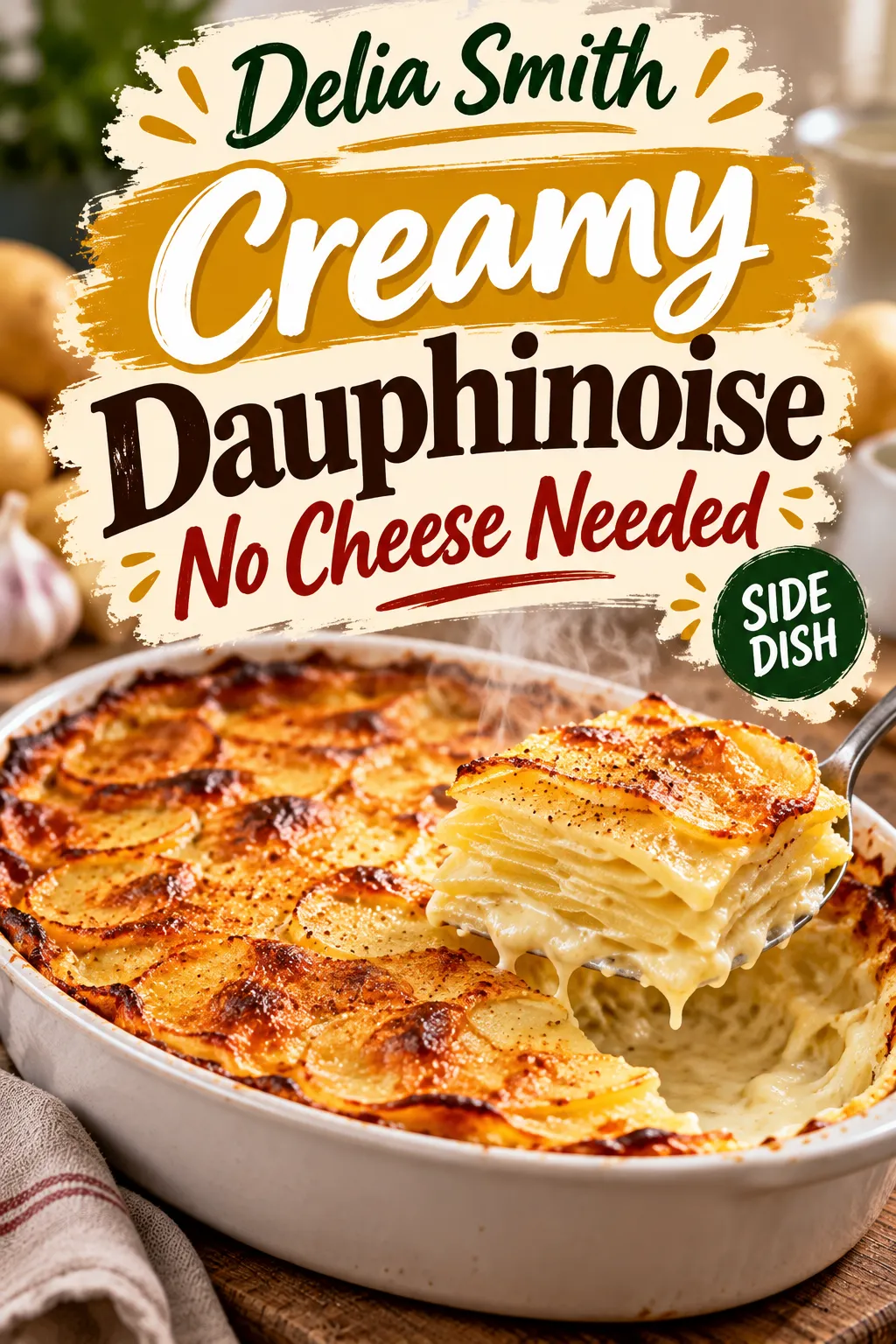

Delia Smith Dauphinoise Potatoes
Ingredients
Equipment
Method
- Prepare. Heat the oven to 150°C (130°C fan, gas mark 2) with a shelf on the highest rung. Butter the gratin dish well.
- Slice. Peel the potatoes and slice them very thinly, about 3mm, using a mandoline or sharp knife.
- Rinse and dry. Swish the slices in a bowl of cold water to remove some starch, then dry them very thoroughly in a clean tea towel.
- Layer. Arrange a layer of potatoes in the dish. Sprinkle over some of the crushed garlic, salt and pepper. Add a second layer of potatoes and more seasoning.
- Add the cream and milk. Mix the cream and milk together and pour evenly over the potatoes.
- Finish. Sprinkle with freshly grated nutmeg and dot the butter in flecks over the surface.
- Bake. Bake on the highest shelf for 1½ hours, until golden on top and the potatoes are completely tender.
- Rest. Let the dish stand for 10 minutes before serving.
Notes
- Quantities and method follow Delia Smith’s Gratin Dauphinois in Delia’s Complete Cookery Course.
- Oven: 150°C conventional, about 130°C fan, gas mark 2 (300°F). Bake on the highest shelf.
- Delia leaves out cheese because she feels it masks the potato flavour.
- To scale up, keep the ratio of 450g potatoes to 150ml cream and 150ml milk, and use a larger dish so the potatoes stay at the same depth.
- Keeps in the fridge for up to 3 days, covered. Reheat covered with foil until hot all the way through.
Note: Estimates only. Values will vary with your exact ingredients and how much salt you add.
Made this? Leave a star rating and a comment below, it’s how this recipe gets found by other people searching for it, and how future versions get better. If you try one of the variations above, let me know how it turned out.



Leave a Reply